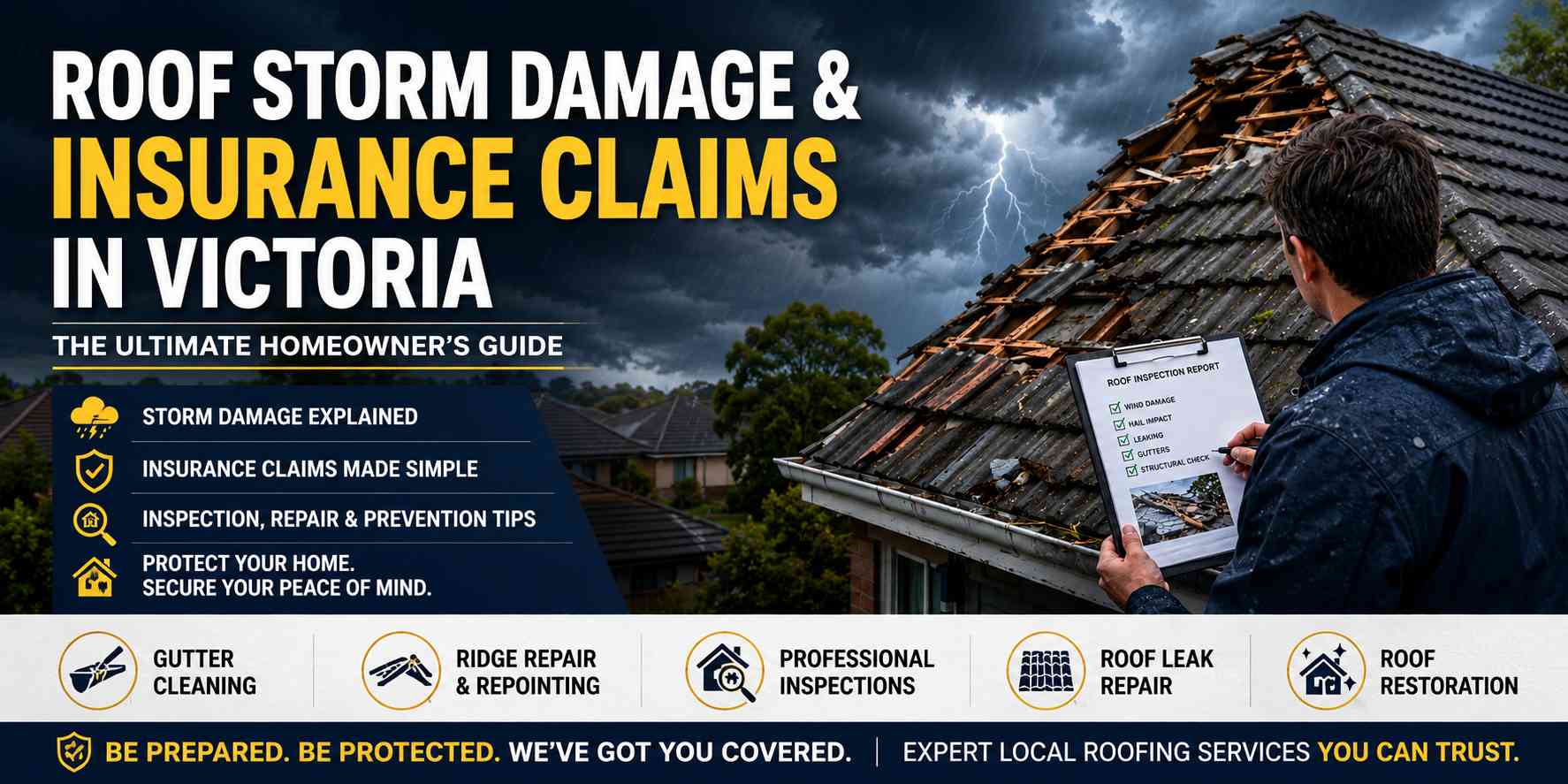
Severe wild weather can strike the southern coast of Australia without warning. Leaving local property owners scrambling to deal with sudden, devastating roof storm damage in Victoria. Whether you are facing a torrential downpour in Melbourne or fierce, salt-laden gale winds in Warrnambool, a compromised roof can quickly escalate from a minor nuisance into an absolute structural disaster. Navigating the aftermath of severe weather requires quick thinking, a reliable roof leak repair strategy. And, a clear understanding of how your home insurance policy handles environmental destruction. Before you reach out to your insurance provider, securing a prompt, professional roof inspection from an experienced local contractor is the single most critical step to ensure your structural damage is fully documented and your payout is maximized.
When the storm clears, knowing exactly what to look for and how the claims process works can save you thousands of dollars out of pocket. Here is an honest, practical breakdown of how to protect your home and navigate your roof insurance claim successfully.
What Exactly Counts as Storm Damage on a Roof?
Insurance companies have very strict definitions of what constitutes valid storm damage. They differentiate between sudden, unpredictable weather events and gradual degradation. Generally, an insurance policy covers damage caused directly by violent forces of nature, which includes:
- Wind Uplift and Dislodgement: High-velocity winds can easily peel back metal roofing sheets, lift loose flashings, or rip heavy terracotta and concrete tiles right off your roof frame.
- Hail Impact Damage: Severe hailstorms act like hammers hitting your home. Hail can crack or shatter old tiles, create fractures in protective coatings, and leave deep dents in metal roofs that trap water and cause premature rusting.
- Impact from Falling Debris: Heavy tree branches, flying outdoor furniture, or loose structural elements from neighboring properties can puncture your roof lining and snap rafters.
- Flash Flooding and Gutter Overwhelm: When an immense volume of rain falls in a short window, water can overcome your drainage system, causing a severe gutter overflow that forces water backward into your eaves, ceiling cavity, and internal plaster walls.
Why Do Roof Insurance Claims Get Rejected in Victoria?
This is the most common trap Victorian homeowners fall into. You notice a leak after a massive storm, file a claim, and expect the insurer to pay for a full repair or roof restoration. Instead, the claim gets rejected. Why?
The short answer is: prior neglect and lack of maintenance.
Insurance companies send out specialized assessors whose job is to determine the exact root cause of the water entry. If the assessor climbs up and finds that the storm merely exposed pre-existing issues—such as completely choked gutters, crumbling and rotten ridge mortar, or ancient, porous tiles that should have been sealed years ago—they will classify the issue as general “wear and tear.”
In the eyes of the insurer, it is your responsibility to maintain the structural integrity of your home. If a leak occurs because your gutters were full of leaves, causing water to backflow, or because your ridge caps were already cracked before the wind picked up, your claim will likely be denied. This is exactly why keeping a clear record of regular maintenance history, professional cleanings, and timely ridge repairs is so vital when you need to prove your home was well-cared for prior to a storm.
How Do You Successfully File a Roof Storm Damage Claim?
If your home has been hit by severe weather, following a systematic, step-by-step approach will dramatically improve your chances of a successful insurance payout.
Step 1: Prioritize Safety First
Never climb onto a wet, slippery, or storm-damaged roof yourself. Look for immediate hazards like sagging ceilings inside or downed power lines outside. If water is leaking near electrical outlets or light fixtures, turn off your power at the main switchboard immediately.
Step 2: Document Everything from the Ground
Take comprehensive, high-resolution photos and videos of any visible damage from ground level. Document the internal damage as well—water stains on the plaster, ruined insulation, sagging ceilings, or warped floorboards. Keep a precise log of the exact date and time the storm hit, as insurers cross-reference this with local Bureau of Meteorology (BOM) weather data.
Step 3: Call a Local Roofing Specialist Before Your Insurer
While it is tempting to call your insurance company first, getting an independent, trusted local roofing contractor out to your property is a smarter move. Insurance assessors are often overloaded after a major storm and may miss subtle structural issues. A dedicated roofing professional will provide an honest, un-biased assessment report detailing the exact scope of the damage, what caused it, and a comprehensive quote for the required fixes.
Step 4: Mitigate Further Damage
Legally, insurance companies require you to take reasonable steps to prevent further damage to your property after an event. If your roof has a gaping hole, you may need to arrange for emergency roof repairs or a temporary tarping service to keep the rain out while your claim is being processed.
How Can You Prepare Your Roof to Survive the Next Big Victorian Storm?
The old saying holds true: an ounce of prevention is worth a pound of cure. You do not want to test the strength of your roof during a winter gale. Proactive preparation is the best insurance policy you can have.
- Keep Your Gutters Completely Clear: Regular gutter cleaning ensures that when a massive downpour hits, your drainage system can move thousands of liters of water away from your foundations and ceiling lines without breaking a sweat.
- Address Weak Mortar Early: Your ridge caps hold your entire tile system together. If the mortar is crumbling, get a professional ridge repair and re-pointing service. Completed using modern, flexible acrylic compounds that won’t crack under wind pressure.
- Inspect Overhanging Trees: Trim back heavy tree branches that hang directly over your roofline. During high winds, these branches can snap and act like battering rams against your tiles or metal sheets.
- Invest in a Professional Restoration: If your roof is looking faded, chalky, or worn out, a comprehensive roof restoration adds a tough, defensive membrane coat that reinforces your materials against heavy rain, hail, and intense UV degradation.
Secure Your Peace of Mind with the Experts at JC Roofings
Dealing with the aftermath of a severe storm is stressful enough without having to fight an insurance company over structural damage. Having a trusted, licensed local professional by your side makes all the difference.
At JC Roofings, we have spent more than 15 years helping homeowners across Warrnambool, Portland, Melbourne, and surrounding Victorian regions protect their properties from the elements. We know exactly how Victorian weather behaves, and we understand what insurance companies look for when assessing damage.
Whether you need urgent roof leak repair, a thorough post-storm professional roof inspection. Or you want to prevent future issues with our premium gutter cleaning and full roof restoration services. Our team is ready to deliver honest advice and long-lasting quality workmanship.
Don’t leave your home’s safety to chance after a storm. [Get in touch with the specialist team at JC Roofings today]. For a transparent inspection, an accurate assessment report, and a free quote!